

Can the Resurrection of Jesus Be Trusted?
Why do Christians believe Jesus rose from the dead? The answer is not simply, “because the Bible says so.” This message looks at the historical setting, the early resurrection claim, the people who said they saw Jesus alive, and why the resurrection still matters for your life.
The short answer
Why do Christians believe Jesus rose from the dead?
Christians believe the resurrection because the claim appears very early, named people said they encountered Jesus alive after His death, and the first Christian witnesses kept publicly proclaiming that Jesus had risen. Historical sources outside the New Testament also support important parts of the setting: Jesus existed, He was executed under Pontius Pilate, and Christians were worshiping Christ very early.
History can help us establish what people said, what they did, and how early the claims appear. The further question is personal as well as historical: what best explains the evidence, and what will you do with Jesus?
Listen and keep studying
Resources for Did Jesus Really Rise?
Listen to the Message
Can the Resurrection of Jesus Be Trusted?
Message Outline
Learn and make plans to grow this week with the key Scriptures and evidence from the message.
30 Honest Questions
Keep exploring questions about Jesus, the Bible, science, suffering, doubt, church hurt, and more.
A closer look
What evidence supports the resurrection claim?
The sermon builds a cumulative case. No single point is asked to carry the whole argument. Instead, we look at what is historically grounded, what the earliest Christians claimed, and how the people closest to the claim responded.
Jesus was a real person in history.
Jesus does not appear only inside Christian writings. Ancient references connected with Josephus, Tacitus, Pliny, Suetonius, and Lucian place Jesus and the early Christian movement in the world of first and second century history.
Jesus really died.
Tacitus, a Roman historian writing in the early second century, says that Christus suffered the extreme penalty during the reign of Tiberius under Pontius Pilate. That is non-Christian evidence for the execution at the center of the Christian story.
Christians worshiped the crucified Jesus.
Pliny the Younger reports that Christians met before dawn and sang to Christ “as to a god.” The Alexamenos graffiti, usually dated to the late second or early third century, mocks a man for worshiping a crucified figure. The mockery itself shows how striking Christian worship of a crucified Messiah appeared in the ancient world.
The resurrection claim appears early.
First Corinthians was written around the middle of the first century, and Paul says he is passing on what he had already received. Scholars widely recognize 1 Corinthians 15:3 to 5 as containing tradition that predates the letter. The resurrection was not a story added centuries after Jesus.
Named people claimed they saw Jesus alive.
Paul names Peter, the Twelve, more than five hundred people, James, the apostles, and himself. The sermon pays special attention to James, who became a leader in the Jerusalem church, and Paul, who changed from persecuting Christians to proclaiming Christ.
The disciples went from hiding to public proclamation.
The New Testament describes frightened and scattered followers who later publicly announced that God raised Jesus from the dead, even when that proclamation brought threats, arrests, and beatings. Their persistence does not by itself prove the resurrection, but it is part of the historical question that needs an explanation.
Outside the Bible
Do non-Biblical sources support what Christians say about Jesus?
They support important historical pieces of the picture. They do not independently prove the resurrection. That distinction matters.
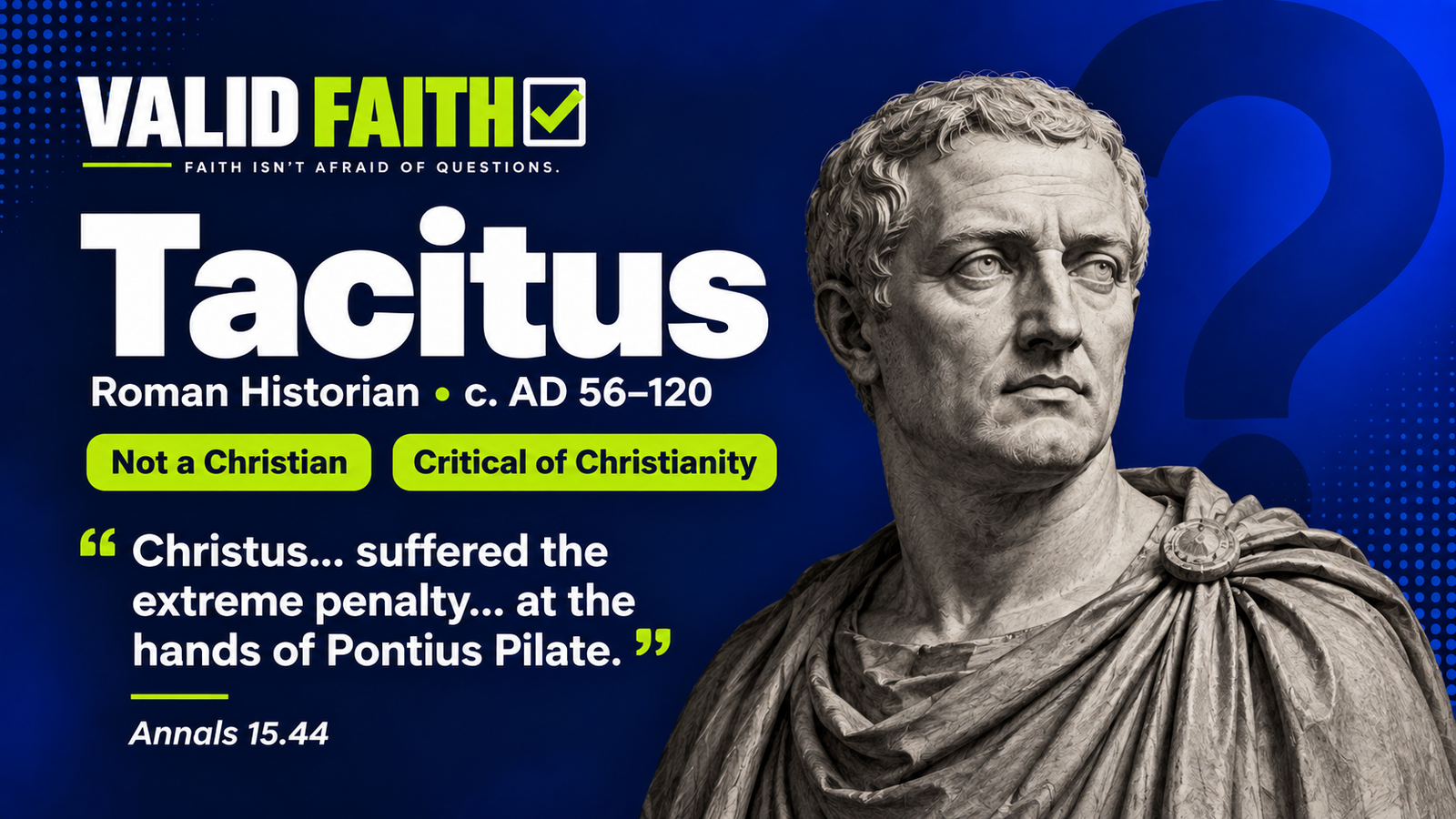
What did Tacitus say about Jesus?
Tacitus was a Roman historian and not a Christian. Writing around AD 116, he says that Christus “suffered the extreme penalty” under Pontius Pilate. Tacitus is an important non-Christian witness to the basic historical fact that Jesus Christ actually died on the cross.
Anyone who claims that Christ never died on the cross has a mountain of historical evidence to overcome. The crucifixion is not supported only by Christian Scripture; even a hostile Roman historian records the execution of Christ under Pontius Pilate.
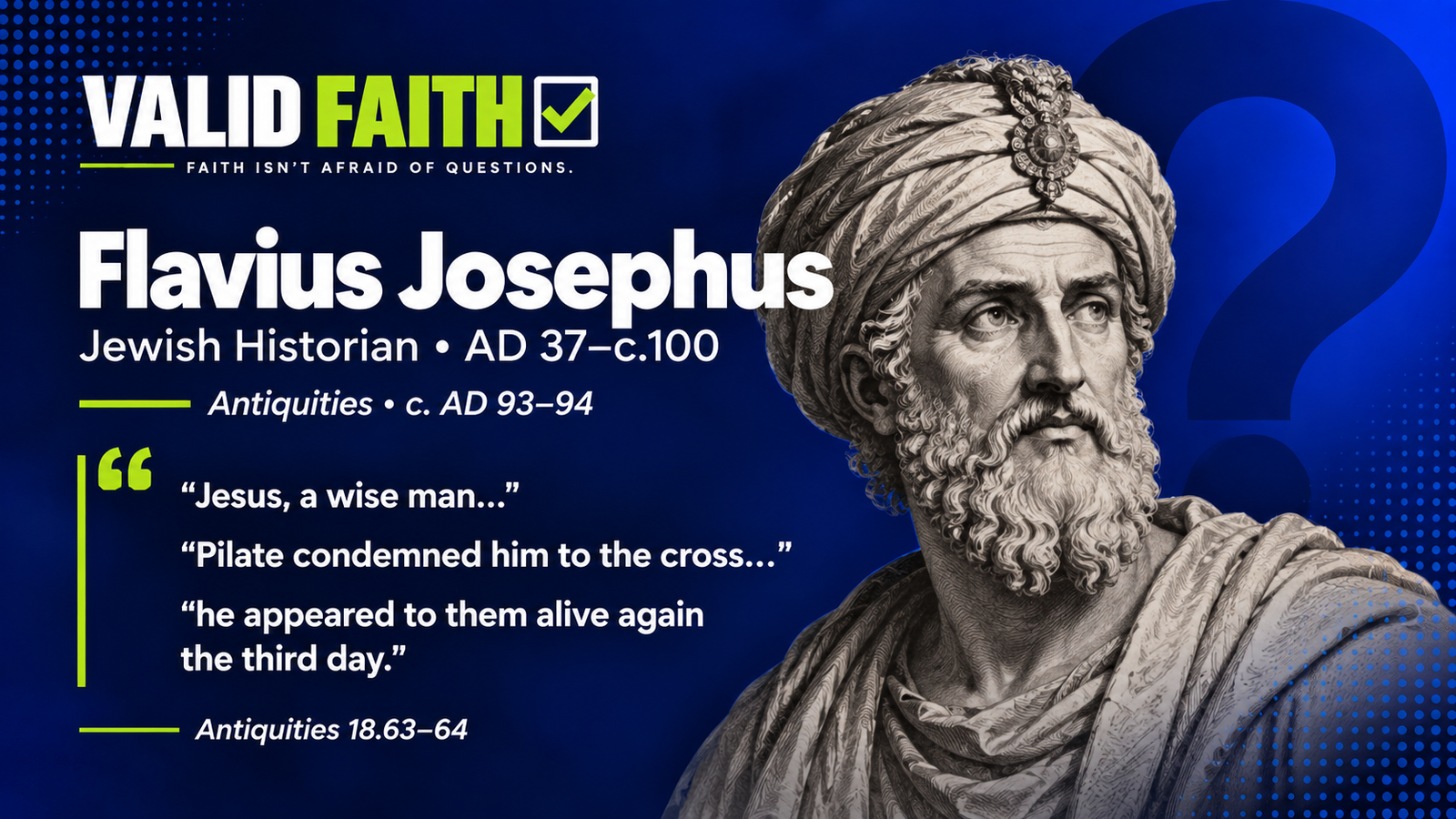
What did Josephus say about Jesus?
Josephus was a first-century Jewish historian writing Antiquities around AD 93–94. He records Jesus as a wise man and doer of wonderful works, says that Pilate condemned Him to the cross, and records that “he appeared to them alive again the third day.” Most strikingly, Josephus mentions Jesus appearing alive again on the third day as part of his historical account.
Josephus notes the resurrection as part of his historical account. Those who deny the resurrection have this evidence to deal with. Those who receive the resurrection can stand on this evidence.
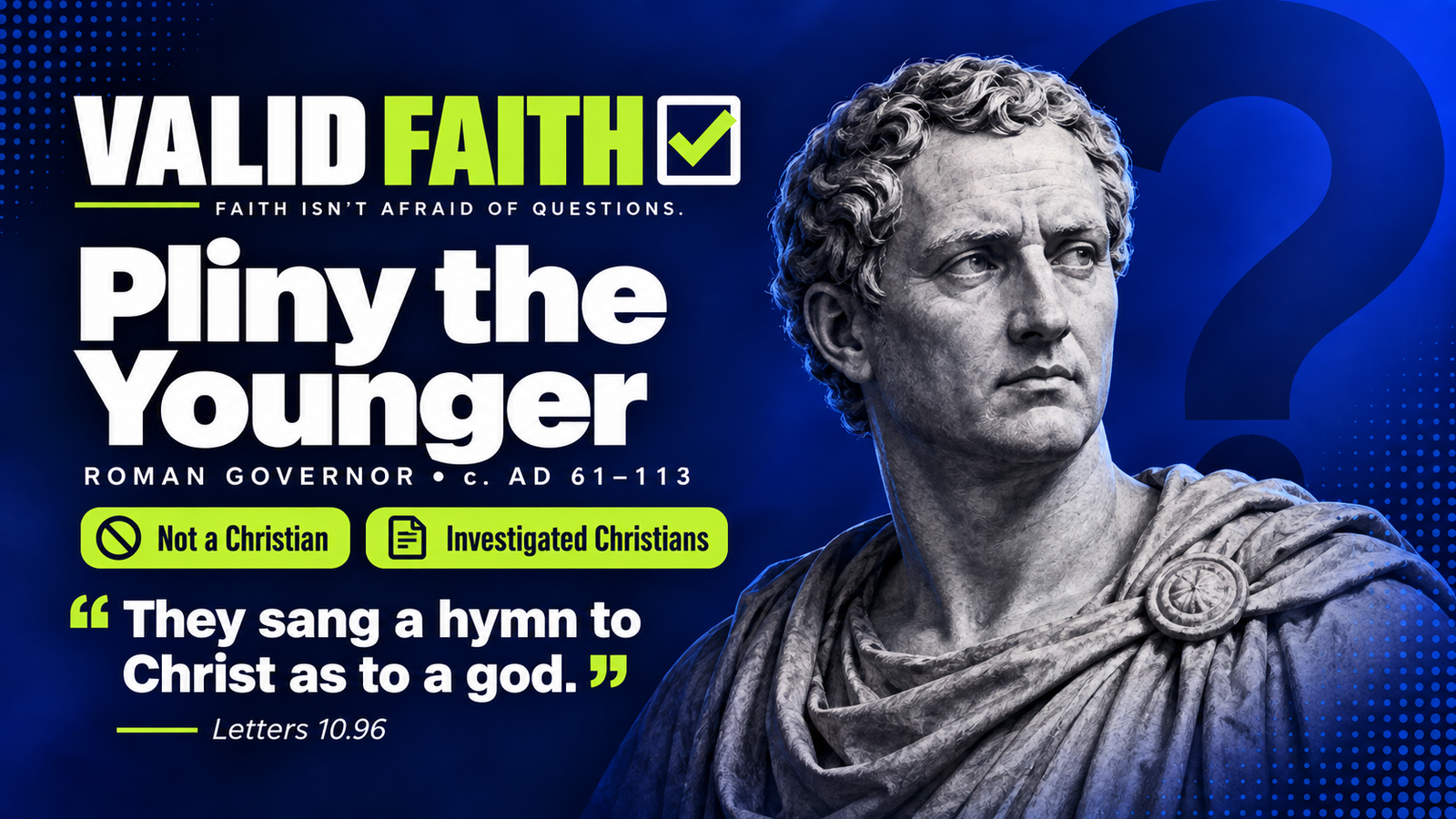
What did Pliny say about early Christians?
Pliny the Younger was a Roman governor writing to Emperor Trajan around AD 112 while investigating Christians. He reports that Christians met on a fixed day and sang a hymn to Christ “as to a god.” Jesus was not merely remembered—He was worshiped as God. Christians still worship Christ as God today.
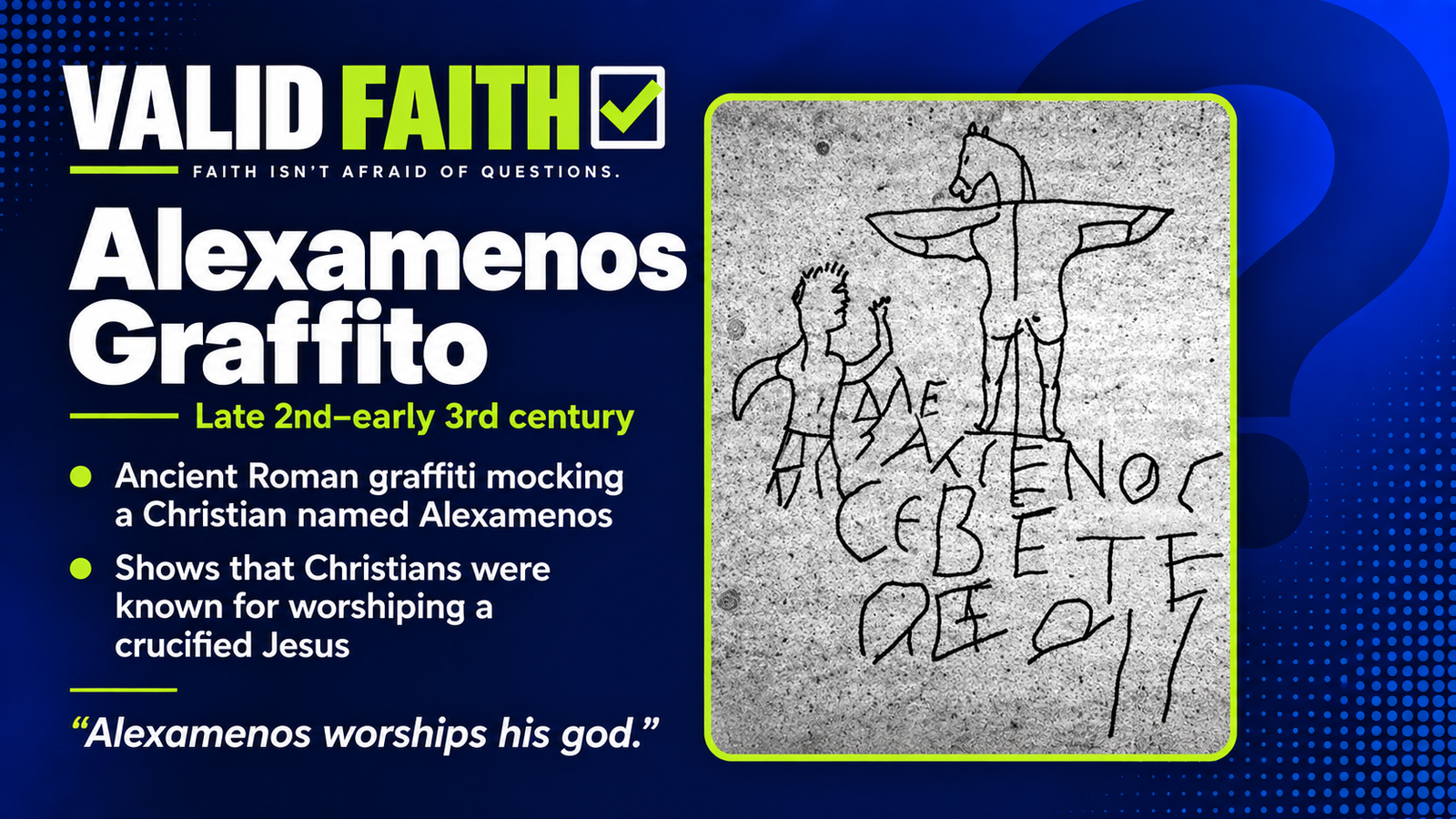
What does the Alexamenos graffiti show?
The ancient Roman graffiti mocks a Christian named Alexamenos worshiping a crucified figure with a donkey head. The caption says, “Alexamenos worships his god.” Notice Alexamenos standing with his hand raised toward the cross—a worshiper. This is early evidence that Christians openly worshiped the crucified Christ. Christians still lift our hands to the Lord in worship today.
Further study: Tacitus, Annals 15 · Pliny, Letters 10.96 · Josephus, Antiquities 20
How early was the claim?
The resurrection is not a late Christian addition.
Paul wrote 1 Corinthians around AD 55, only a few decades after the crucifixion. More importantly, Paul introduces the core message as something he had already “received” and was now passing on. Scholars discuss the exact date and form of this earlier tradition, but its pre-Pauline character is widely recognized.
The sermon question
What best explains the evidence?
The goal is not to borrow someone else’s faith. Pastor Chris asks us to look carefully and answer the question ourselves.
Jesus existed. Jesus died by crucifixion. Resurrection was proclaimed early. Named people claimed encounters with Him alive. James became a believer. Paul became a preacher. Frightened followers became public witnesses.
What best explains all of that?

More than a history question
Why does the resurrection matter for my life?
Paul does not simply say that Christ died. He says Christ died for our sins. The resurrection is not only a claim about the past. Christianity says it changes what is possible now.
Forgiveness is real.
The gospel says Jesus died for our sins and rose again. Your past does not have to have the final word.
Hope is real.
First Peter connects the resurrection of Jesus with a living hope. Christian hope is grounded in a living Christ.
Death is not the end.
If Jesus is alive, death does not get the final word. That is why the resurrection sits at the center of Christian faith.
If Jesus is alive
What should I do next?
Is Jesus your Lord?
Romans 10:9 connects confessing Jesus as Lord with believing that God raised Him from the dead. This is personal faith, not borrowed faith.
Do not stay stuck.
Ask your question. Pray with someone. Talk with Pastor Chris. If you believe, let someone help you figure out what following Jesus looks like next.
Jesus is not only alive on Sunday.
Talk to Him. Follow Him. Trust Him. Walk with Him this week.
Real questions
Questions people ask about the resurrection
Why do Christians believe Jesus rose from the dead?
Christians point to the early resurrection proclamation, named witnesses in 1 Corinthians 15, the transformation of people such as James and Paul, and the public witness of the earliest disciples. The Christian conclusion is that Jesus truly rose. The historical evidence invites you to examine that conclusion rather than simply inherit it.
Can the resurrection be historically trusted?
History can establish that Jesus existed, was executed, that resurrection belief appeared very early, and that specific people were identified as witnesses. Historical method does not force everyone to the same conclusion about a miracle, so the question becomes which explanation best accounts for the evidence.
Are there non-Biblical sources that mention Jesus?
Yes. Tacitus refers to Christus and His execution under Pontius Pilate. Josephus refers to James as the brother of Jesus who was called Christ. Pliny describes early Christian worship of Christ. These sources support the historical setting without functioning as independent eyewitness accounts of the resurrection.
Do sources outside the Bible confirm Jesus was crucified?
Tacitus provides a clear non-Christian reference to Christus suffering the extreme penalty under Pontius Pilate. Josephus also contains material about Jesus, although one passage has a complicated textual history and should be handled carefully.
How early was the resurrection claim?
Paul’s first letter to the Corinthians dates to roughly the mid AD 50s and contains a resurrection formula that predates the letter. This places resurrection belief within the earliest period of the Christian movement, not centuries later.
Why does the resurrection matter if I am not sure I am a Christian?
Because Christianity rises or falls with this claim. Paul says that if Christ has not been raised, Christian faith is empty. If Jesus is alive, however, then His identity, His teaching, forgiveness, hope, and eternal life deserve serious attention.
Allen and Collin County
Looking for a place to explore faith in Allen, Texas?
First Christian Church of Allen welcomes people who believe, people who doubt, and people who are still deciding what they think about Jesus. You do not need to arrive with polished answers. Bring the real questions.

Ask Pastor Chris
Questions are welcome.
Chris Fluitt serves as pastor of First Christian Church of Allen. He loves helping people explore Jesus, work through doubt, and move from borrowed faith toward a faith they have examined for themselves.
If you have a question about Jesus, the resurrection, faith, doubt, or something from this message, text Chris. You do not need to have the question perfectly worded.
Keep investigating
You do not have to live on borrowed faith.
Keep asking. Keep looking at the evidence. Keep coming back to the central Christian question: Who is Jesus, what did He do, and what will you do with Him?